
The Future of Work: AI, People, and Lessons from Tokyo
By Todd Murphy | November 5, 2026
AI is changing the future of work by reshaping tasks, responsibilities, and the skills businesses need. Successful AI adoption requires clear ownership, reliable information, employee training, and workflow improvements measured by quality, cost, and customer value. Those are the priorities I’m bringing home from Tokyo.
Those are the lessons I’m bringing home from the FIBEP World Media Intelligence Congress, held November 3 through 5, 2026, in Tokyo. Although the gathering focused on media intelligence, the questions reach into almost every business adopting AI.
How do we move faster without creating more mistakes? What should people do with the time automation saves? How do we remain distinctive when competitors have access to similar tools?
The Congress theme, KAIZEN: Continuous Improvement for a New Era, offers a practical starting point. Improve the work, learn from the result, and keep going.
After more than 30 years in business, I’ve seen plenty of faster ways to stay busy. I’m more interested in helping companies make that work count.
How can businesses improve workflows with AI?
AI workflow optimization means improving the complete process, including preparation, handoffs, review, corrections, and delivery. The measure of success is whether the finished work becomes more useful, reliable, or efficient.
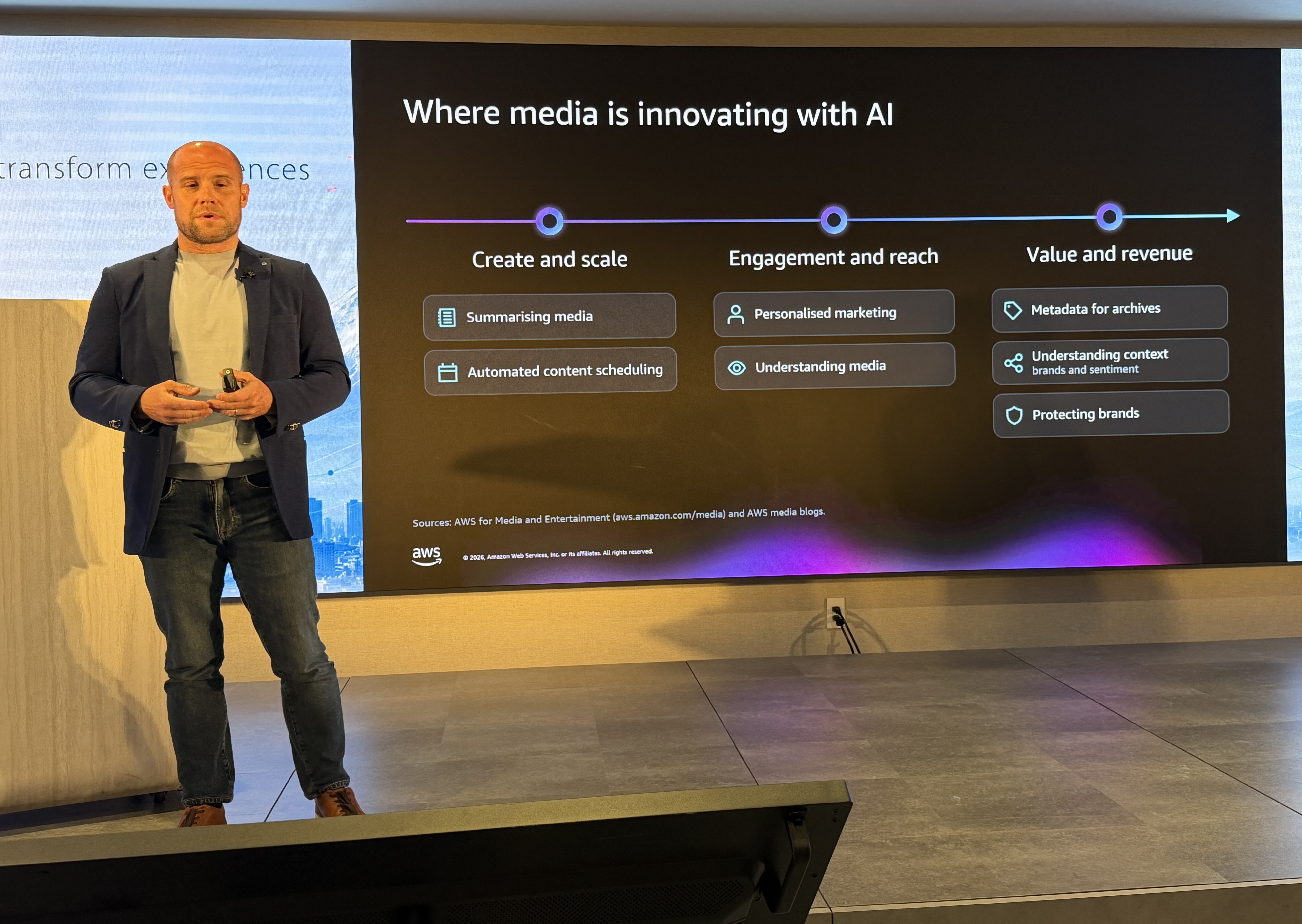
One slide in the AWS presentation connected AI applications across content production, audience engagement, and business value. My takeaway was a question any leadership team can use: What improves for the customer when we introduce this capability?
Consider a sales proposal. AI might produce a draft in minutes. But if the account manager spends an hour correcting assumptions and checking commitments, the apparent time saving can disappear.
What skills and leadership does AI adoption require?
AI adoption requires subject expertise, source evaluation, critical thinking, and the ability to question an output. Leaders need to define who makes decisions and who is accountable for quality. The Congress program's attention to enterprise AI adoption and the human side of change reinforced that connection for me.
When automation changes a role, employees need clear responsibilities, training, and authority to question the output. A manager cannot ask someone to own quality while expecting them to approve everything the software produces.
Leaders also need to think about how people learn. If AI handles more introductory work, how will junior employees develop the judgment that prepares them for greater responsibility?
Culture allows strategy to succeed. Involving employees in redesigning their work helps reveal the exceptions and practical constraints a software demonstration rarely shows.
Time saved should have a purpose, whether that is stronger customer relationships, deeper analysis, additional capacity, or a more sustainable workload.
Why do data rights and trusted sources matter?

AI workflows depend on the information businesses put into them. Source quality and clear permissions help teams judge what they can rely on and how they can use it. The publisher panel brought that relationship between information creators and users into focus.
Agostina Garola of Nine Publishing, Sonia La Fountain of Mei Global, Shawn Polk of The Washington Post, and Jason Malatesta of Dow Jones participated in The Publisher's Voice: Redefining the Value of News in the Age of AI. Jon Anders Tangnes of Media:Track moderated.
My takeaway was encouraging. Publishers and media monitoring organizations recognize opportunities to work together toward fairer licensing and usage agreements.
That shared interest is central to why I initiated the Media Rights Trust Initiative, or MRTI, which brings stakeholders together to advance fair, transparent, and sustainable approaches to licensing and responsible content use.
The broader lesson applies to businesses working with external research, licensed data, creative content, and specialist knowledge. Understand where information comes from, what uses are permitted, and how the relationship can remain commercially sustainable. Those questions belong in the design of an AI workflow.
How can businesses avoid AI homogenization?
Businesses can reduce AI homogenization by checking original sources, considering alternative explanations, and applying their own expertise to each customer's situation. Overreliance on similar models, prompts, and sources can otherwise produce familiar language and predictable recommendations.
Customers do not need five companies delivering the same answer with five different logos.
Businesses can stay fast, agile, and competitive by automating repeatable preparation and directing expert attention toward the decisions that matter most. Clear review rules and escalation paths help preserve speed without leaving quality to chance.
The value of expertise includes knowing when a plausible answer misses the point.
How should leaders measure AI's business value?
Measure AI's business value across the complete workflow: turnaround time, accuracy, rework, total cost, and usefulness to customers. A faster draft is one data point; the finished result determines whether the change worked.
As a growth architect, I'll help consulting clients put that discipline into practice:
Choose a problem worth solving. Start with a customer need, delayed decision, or operational bottleneck.
Measure the whole result. Compare turnaround time, accuracy, rework, cost, and customer usefulness before and after a change.
Prepare the team to succeed. Define ownership, build skills, and decide how newly available capacity will support the business.
Tokyo reinforced my belief that the future of work requires deliberate leadership. We have an opportunity to build businesses where technology supports capable people, trusted information, and better decisions.
If your team is adopting AI but still wrestling with delays, inconsistent quality, or unclear responsibilities, let's discuss AI adoption and business process optimization.